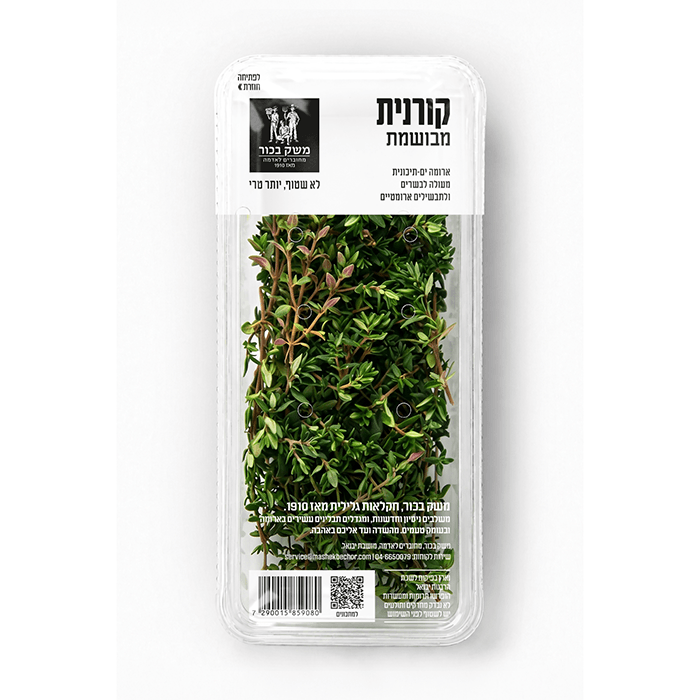
The origin of the name Thymus is Greek and means the ‘perfume plant’. The name thyme comes from the feeling of coolness that evokes it’s taste in the mouth and throat, much like the mint flavor.
The Egyptians mixed it with embalming preparations, the Greeks in sacrifice ceremonies, and the Romans added it to the bath to nurture the skin.
Our ancestors used the thyme for seasoning and heating. Pliny the Roman scholar recommends in his writings to spice up the space of the house in thyme as a way to exclude melancholy. Dioscorides, an old Greek doctor, suggests drinking water cooked in them thyme, claiming that it treats hepatitis, neutralizes snake venom, speeds up menstruation and opens urinary obstructions.
The thyme is used for seasoning fish, rice stuffing, addition to pies, soups, sausages, meat, pizza, fresh tomatoes, sweets, and drinks.
In folk medicine, it is used as a cure for coughs, respiratory illnesses, food poisoning, gastritis, and kidney stones.